
Even by conservative assumptions that 5 to 10 per cent of infected individuals develop long Covid, India today may be home to 50 to 100 million infected individuals -- many silently coping with breathlessness, fatigue, palpitations, brain fog, or unexplained clotting tendencies.

A Chinese team of virologists has discovered a new bat coronavirus that can infect human cells, raising concerns about potential animal-to-human transmission. The virus, a new lineage of the HKU5 coronavirus, uses the same human receptor as the virus that causes COVID-19. The study, led by Shi Zhengli, a prominent virologist at the Wuhan Institute of Virology, was published in the journal Cell. The discovery comes amid ongoing scrutiny of the Wuhan lab, which was previously accused of being the source of the COVID-19 pandemic. The Chinese government has denied any involvement in the virus's origin and insists that the Wuhan lab never engaged in gain-of-function studies on coronaviruses.
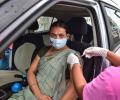
The Hyderabad-based AIG Hospitals recently published a study conducted on 260 healthcare workers, who got vaccinated between January 16 and February 5, in the International Journal of Infectious Diseases (a peer-reviewed journal).

The Union health ministry data on Friday said the number of coronavirus cases in India breached the 45 lakh mark while a data released by a national public health institute in the US said the number of infections in the North American country crossed six million as of September 8.

The most striking aspect of this study was that a large proportion of the Indian population was asymptomatic for COVID infection and the age group 26-35 had the maximum number of asymptomatic people, the researchers said.

More than 100 medical experts, academia and scientists on Friday have called for the Rio Olympic Games to be postponed or moved because of fears that the event could speed up the spread of the Zika virus around the world. Their assessment counters the view of some leading experts of infectious disease who say that as long as the necessary precautions are taken there is no reason to cancel the Games. On Thursday, Dr. Tom Frieden, director of the U.S. Centers for Disease Control and Prevention, declared there was no public health reason to cancel or delay this summer's Games. In a public letter posted online, the group of 150 leading public health experts, many of them bioethicists, said the risk of infection from the Zika virus is too high. The letter was sent to Dr. Margaret Chan, director-general of the World Health Organization, and urged that the Games, due to be held in Rio de Janeiro in August, be moved to another location or delayed.

Common symptoms of the novel coronavirus (nCoV) strain, which has infected more than 300 people since the outbreak in Wuhan in December, include respiratory symptoms such as fever, cough, shortness of breath and breathing difficulties, the WHO said
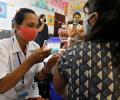
Antibody levels are higher when people receive the COVID-19 vaccine in the afternoon as compared to the morning, according to an observational study.

Yet the international response to this threat caused by the overuse and misuse of antimicrobial drugs has been feeble, they said.

The arrival of summer in India may have raised hopes that hot and humid weather could slow the COVID-19 progression but virologist Naga Suresh Veerapu believes that outbreak and pandemic occurrences often do not follow seasonality.
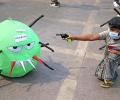
There can be no one answer to the question at the centre of an anxious debate across a world coping with COVID-19 and wondering what will happen if another one comes, but the global scientific community has been working on multiple tracks to ensure that humankind is better prepared.

'Serial testing is much more valuable than a single test which reflects just a point in time.'

'Yoga is magic!' 'Other than keeping me physically fit, it helps me be calm and emotionally balanced. It gives me a lot of energy that keeps me productive throughout the day.'

'There is a Covid vaccine-mania that is happening in the world now and the vaccine makers are using this mania for their own gains'

'As people have moved from cities to small towns and villages, they have carried the infection into new territories.' 'Poor healthcare infrastructure in these places should be a big worry in the days to come.'

Scientists around the world, including in India, suggest it hasn't been tested properly given the time constraint and there may not be enough evidence to prove its efficacy.

The WHOS has long held that the coronavirus is spread primarily by large respiratory droplets when an infected person coughs or sneezes.

'People are just putting the mask below their nose.' 'They are only protecting the mouth, but not the nose.' 'People need to understand that it is the nose which has to be protected.'
 © 2026 Rediff.com - Advertise with us - Disclaimer - Privacy Policy - Sitemap - Feedback - About us - Terms of use - Grievances